Did you know that slot volatility can drastically change your gaming experience, even when you’re just playing for fun in demo mode? Understanding this core concept is crucial for any player looking to make informed choices.
Understanding Slot Volatility: A Deep Dive
Slot volatility, often referred to as variance or dispersion, is a metric used to describe the risk associated with a particular slot machine game. It essentially tells you how often a slot is likely to pay out and the size of those payouts. This isn’t just a random number; it’s calculated based on the game’s programming and mathematics, directly influencing the player’s journey.
The Spectrum of Volatility: Low, Medium, and High
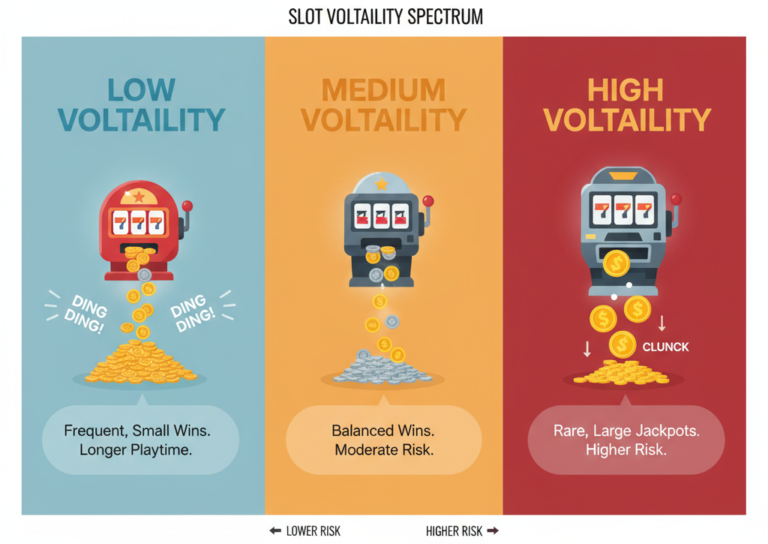
Slot volatility exists on a spectrum, typically categorized into three main levels:
Featured Slots





- Low Volatility Slots: These games offer frequent, smaller wins. They are designed for players who prefer a steady stream of payouts and a less risky gaming session. You’re more likely to see your balance remain relatively stable over longer periods.
- Medium Volatility Slots: Striking a balance, medium volatility slots provide a mix of smaller, frequent wins and less frequent, larger payouts. They offer a more dynamic experience than low volatility games but are still less prone to significant swings.
- High Volatility Slots: These are the thrill-seekers’ choice. High volatility slots pay out less frequently, but when they do, the wins tend to be significantly larger. This means longer dry spells punctuated by potentially massive jackpots. They carry the highest risk but also the greatest reward potential.
How Slot Volatility is Determined
The volatility of a slot machine is determined by its Return to Player (RTP) percentage and the frequency and size of its payouts. While RTP indicates the theoretical percentage of wagered money a slot will pay back to players over an extended period, volatility describes the pattern of those payouts. A high RTP doesn’t necessarily mean high volatility, and vice versa. Game developers carefully balance these factors to create different player experiences.
Why Slot Volatility Matters in Demo Play
Even when you’re not wagering real money, understanding slot volatility is incredibly important for several reasons:
1. Setting Realistic Expectations
Demo play is a fantastic tool for exploring new slot games. However, without understanding volatility, you might form incorrect assumptions about a game’s typical behavior. For instance, playing a high volatility slot in demo mode and hitting a few small wins early on could lead you to believe it’s a low volatility game. This misunderstanding can be costly if you later decide to play with real money.
2. Practicing Bankroll Management
Effective bankroll management is key to responsible gambling. Even in demo play, practicing with different volatility levels helps you understand how quickly your virtual balance can deplete or grow. A high volatility slot can burn through a large virtual balance very quickly, while a low volatility game might allow for extended play with the same virtual amount. This practice translates directly to real-money play.
3. Identifying Preferred Playstyles
Are you someone who enjoys the excitement of chasing big wins, even if it means enduring losing streaks? Or do you prefer a more consistent, less stressful gaming session with frequent smaller wins? Demo play allows you to experiment with slots of varying volatility to discover which playstyle you enjoy most. This self-awareness is vital for a satisfying gaming experience.
4. Testing Game Features and Bonuses
Slot features like free spins, bonus rounds, and multipliers can behave very differently depending on the game’s volatility. In high volatility slots, these features are often the key to unlocking those massive payouts, but they might trigger less often. In low volatility slots, they might be more frequent but contribute to smaller overall wins. Demo play lets you see how these features activate and what kind of impact they have without any financial risk.
5. Understanding Payout Tables and Hit Frequencies
By playing in demo mode, you can observe firsthand the hit frequency of different symbols and combinations. You can also test the effectiveness of various betting strategies and see how they interact with the game’s volatility. This empirical evidence is far more valuable than simply reading about a game’s mechanics.
How to Identify Slot Volatility
While not always explicitly stated, there are several ways to get a good indication of a slot machine’s volatility:
1. Check the Game Information/Paytable
Many slot developers provide information about volatility within the game’s paytable or information section. Look for terms like “low,” “medium,” “high,” or “low variance,” “high variance.” Some might even use descriptive terms like “frequent wins” or “big win potential.”
2. Observe Payout Sizes
Pay close attention to the size of the payouts relative to your bet amount. If you’re consistently winning small amounts that barely cover your bet, it’s likely a low volatility slot. If you see occasional large wins that are many times your bet, it’s probably high volatility.
3. Analyze the Jackpot Size
Slots with massive, life-changing jackpots are almost always high volatility. The potential for such enormous wins comes at the cost of less frequent payouts during regular gameplay.
4. Consider the Number of Paylines and Symbols
Generally, slots with a large number of paylines and many symbols on the reels tend to be higher volatility. This is because there are more possible combinations, making it harder to hit winning ones, but also increasing the potential for complex and lucrative bonus features.
5. Read Reviews and Guides
Many online casino review sites and gaming guides categorize slots by volatility. These resources can be invaluable for quickly identifying games that suit your preferences.
Volatility and RTP: Understanding the Relationship
It’s essential to differentiate volatility from Return to Player (RTP). While both are crucial metrics, they represent different aspects of a slot game:
- RTP: The theoretical percentage of all wagered money a slot machine will pay back to players over a very long period. For example, an RTP of 96% means that, on average, for every $100 wagered, the slot will return $96.
- Volatility: Describes the risk and frequency of payouts. High volatility means payouts are infrequent but potentially large, while low volatility means frequent but smaller payouts.
A slot can have a high RTP and be low volatility (frequent small wins that add up) or high volatility (less frequent wins, but the average win size is large enough to contribute to the high RTP over time). Understanding both is key to choosing games that align with your financial strategy and risk tolerance.
Choosing the Right Volatility for Your Demo Play Style
Your choice of volatility in demo play should mirror your intended real-money playstyle:
- For Beginners or Cautious Players: Start with low volatility slots. They offer a gentler introduction to slot mechanics, allowing you to learn the ropes without significant risk to your virtual balance. You’ll experience more wins, which can be encouraging.
- For Balanced Players: Medium volatility slots are a good middle ground. They provide a mix of excitement and stability, offering a taste of both frequent wins and the potential for larger payouts.
- For Thrill-Seekers: If you enjoy the adrenaline rush of chasing substantial wins and can tolerate longer periods without major payouts, high volatility slots are for you. Demo play here helps you understand the patience required and the potential for massive rewards.
The Benefits of Using Demo Play to Test Volatility
Demo play, also known as free play or fun mode, is an invaluable tool for understanding slot volatility without any financial commitment. Here’s why it’s so beneficial:
1. Risk-Free Exploration
This is the most obvious benefit. You can spin the reels on any slot game, experiment with different bet sizes, trigger bonus features, and observe payout patterns without the fear of losing real money. It’s a safe space to learn.
2. Time to Understand Game Mechanics
Some slot games have complex features and bonus rounds. Demo play gives you the time and space to fully understand how these mechanics work, how often they trigger, and their potential impact on your balance, all dictated by the game’s volatility.
3. Strategy Testing
While betting strategies don’t guarantee wins, you can test how different approaches (e.g., adjusting bet size after wins or losses) interact with the volatility of a slot in demo mode. You can see how quickly your virtual bankroll changes under different scenarios.
4. Identifying Personal Preferences
Ultimately, demo play is about discovery. It allows you to discover which types of games you genuinely enjoy playing. Do you find yourself getting bored with low volatility slots quickly, or do the swings of high volatility slots cause too much stress? Finding this out in demo mode is priceless.
Common Misconceptions About Slot Volatility
There are a few common misunderstandings about slot volatility that can trip up players:
Misconception 1: High RTP Means Frequent Wins
As discussed, RTP is about the long-term average payout, not the frequency of wins. A high RTP slot can still be high volatility, meaning wins are infrequent but large.
Misconception 2: Volatility is the Same as Difficulty
Volatility refers to the risk and payout patterns, not the game’s complexity or how “hard” it is to win. All volatility levels can feature simple or complex gameplay.
Misconception 3: Demo Play Accurately Reflects Real Money Payouts
While demo play is a great indicator, remember that it’s a simulation. Actual results in real money play can vary due to the inherent randomness of Random Number Generators (RNGs). However, the patterns of volatility will remain consistent.
Expert Insights on Slot Volatility
“Understanding slot volatility is paramount for players who want to manage their expectations and enjoy their gaming sessions more,” says Dr. Evelyn Reed, a behavioral game designer. “It allows players to align the game’s inherent risk with their personal comfort level, transforming a potentially frustrating experience into an enjoyable one.”
Statistics from the gaming industry show that players who understand volatility tend to engage with games more strategically. A study by Global Gaming Analytics indicated that players aware of volatility reported higher satisfaction levels, regardless of whether they were playing for real money or in demo modes. This suggests that knowledge itself enhances the gaming experience.
Conclusion
Slot volatility is a fundamental concept that dictates the rhythm and risk of any slot machine. Whether you’re a seasoned player or just starting, understanding low, medium, and high volatility is crucial. Demo play offers the perfect, risk-free environment to explore these differences, discover your preferred playstyle, and set realistic expectations. By paying attention to volatility, you can make more informed choices, manage your virtual bankroll effectively, and ultimately, have a more enjoyable and satisfying time exploring the vast world of online slots.
Frequently Asked Questions (FAQs)
RTP (Return to Player) is the theoretical percentage of wagered money a slot pays back over the long term. Volatility (or variance) describes the frequency and size of those payouts – whether they are frequent and small (low volatility) or infrequent and large (high volatility).
Not always explicitly stated, but you can often infer it from the paytable, jackpot size, number of paylines, and reviews. Many modern slots do include this information in their game settings.
No. Demo play is a simulation. While it accurately reflects the game’s volatility patterns and mechanics, the actual outcome of any spin is determined by a Random Number Generator (RNG) and can vary in both demo and real money modes.
Low volatility slots are generally best for beginners. They offer more frequent wins, which can be encouraging and allow for more practice with game mechanics without rapid depletion of the virtual balance.
In high volatility slots, bonus features are often the key to the biggest wins but may trigger less often. In low volatility slots, bonus features might be more frequent but contribute to smaller, more consistent wins.
Yes. A slot can have a high RTP while still being high volatility. This means that over a vast number of spins, the slot returns a high percentage of wagers, but these returns are achieved through less frequent, larger wins rather than consistent small ones.